
Manufacturing environments depend on consistent weld quality, repeatable processes, and reliable material performance. Nondestructive Testing (NDT) allows manufacturers to verify product integrity, identify defects early, and maintain production standards without interrupting workflow or damaging finished components.
NDT is used throughout the manufacturing process, from incoming material verification to in-process inspection and final quality control. It supports efficient production while ensuring components meet design, performance, and compliance requirements.
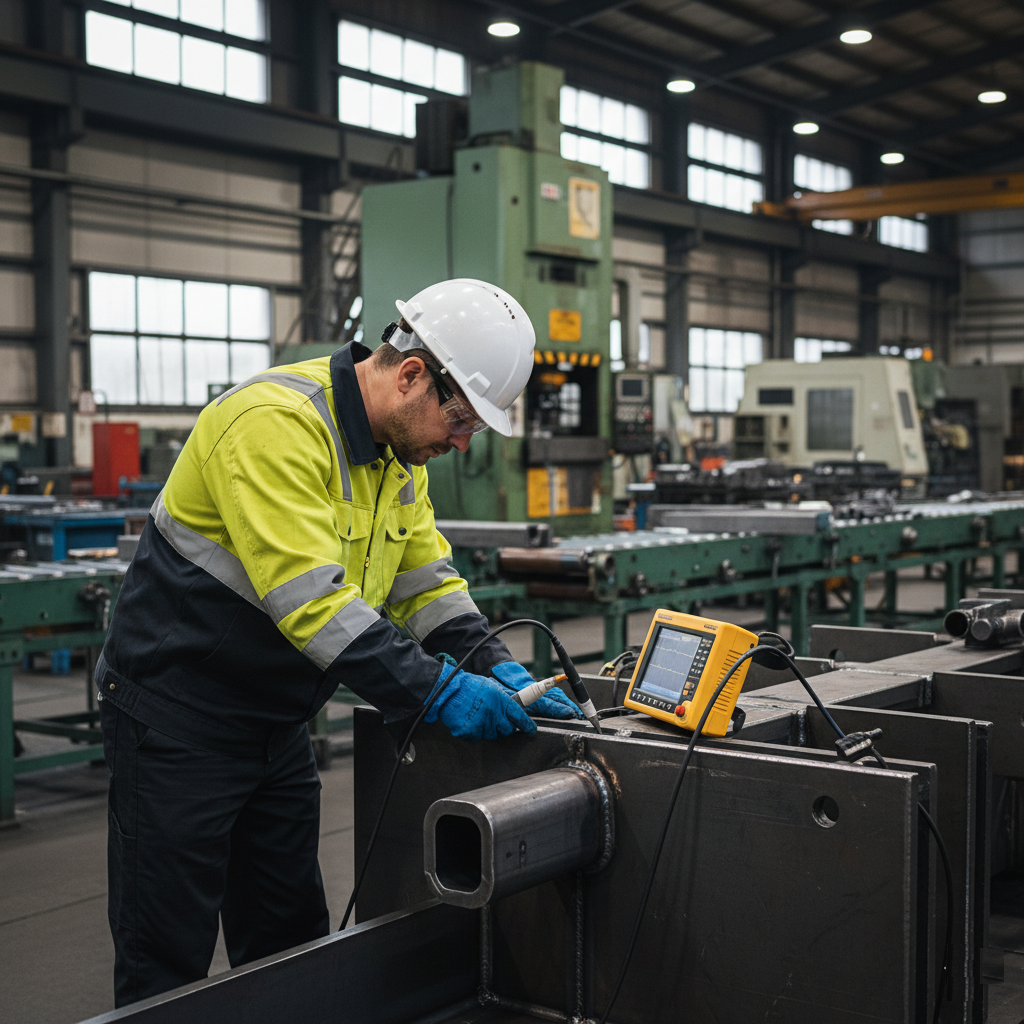
NDT is commonly applied across a wide range of manufacturing operations, including:
Welded assemblies and fabricated components
Stainless steel and aluminum products
Machined parts, castings, and forgings
Production welding and repetitive processes
Critical components requiring traceability
Whether producing high-volume parts or precision-fabricated assemblies, NDT helps ensure quality remains consistent from the first piece to the last.
Visual Testing is the first step in manufacturing quality control. Inspectors evaluate weld fit-up, bead consistency, surface condition, and overall workmanship during production.
VT helps identify issues such as incomplete fusion, undercut, surface porosity, misalignment, and process inconsistencies before they affect downstream operations or final acceptance.
Penetrant Testing is widely used in manufacturing for both ferrous and non-ferrous materials. PT is highly effective for detecting surface-breaking defects such as cracks, porosity, leaks, and fatigue damage.
PT is commonly applied to:
Stainless steel and aluminum components
Precision-machined or finished surfaces
Castings and forgings
Welded assemblies requiring high sensitivity
Magnetic Particle Testing is used on ferromagnetic materials to detect surface and near-surface defects. MT is effective for identifying cracks, seams, laps, and weld toe defects in carbon steel components commonly used in manufacturing.
This method provides fast feedback and is well suited for production environments where efficiency matters.
Ultrasonic Testing evaluates internal material and weld integrity using high-frequency sound waves. UT is used when internal defects, wall thickness, or structural consistency must be verified.
UT is often applied to:
Critical welded components
Heavy-wall or load-bearing parts
High-reliability assemblies
Components subject to stress or fatigue
UT allows accurate defect detection and sizing without cutting or altering the part.
Manufacturing NDT supports internal quality programs and external compliance requirements, including ISO-based QA systems and customer-specific specifications. Inspection records provide documentation for:
Process control and traceability
Customer acceptance and audits
Continuous improvement initiatives
Defect tracking and root-cause analysis
By integrating NDT into production workflows, manufacturers can improve consistency while reducing rework and scrap.
Maintains consistent production quality
Identifies defects before parts leave the facility
Reduces scrap, rework, and warranty risk
Improves efficiency and throughput
Supports QA, ISO, and customer requirements
Catching defects early is cheaper than explaining them later. NDT keeps quality predictable instead of hopeful.
Manufacturing inspection must be accurate, repeatable, and efficient. Professional NDT integrates into production without slowing output or disrupting operations.
Whether supporting routine quality checks or critical component verification, manufacturing NDT provides confidence that products meet specifications and perform as intended.
Contact Us to schedule NDT services for manufacturing operations.
Critical parts or high-volume processes often require routine NDT.

