
Marine and shipyard welding is exposed to some of the most aggressive service conditions in any industry. Constant saltwater exposure, high humidity, cyclic loading, vibration, and corrosion place extreme stress on welded joints and structural components. Nondestructive Testing (NDT) is essential for verifying weld integrity, preventing premature failures, and ensuring vessels and waterfront structures remain safe and operational.
Marine NDT supports both new fabrication and in-service inspection, allowing weld quality and material condition to be evaluated without damaging the component or interrupting operations.
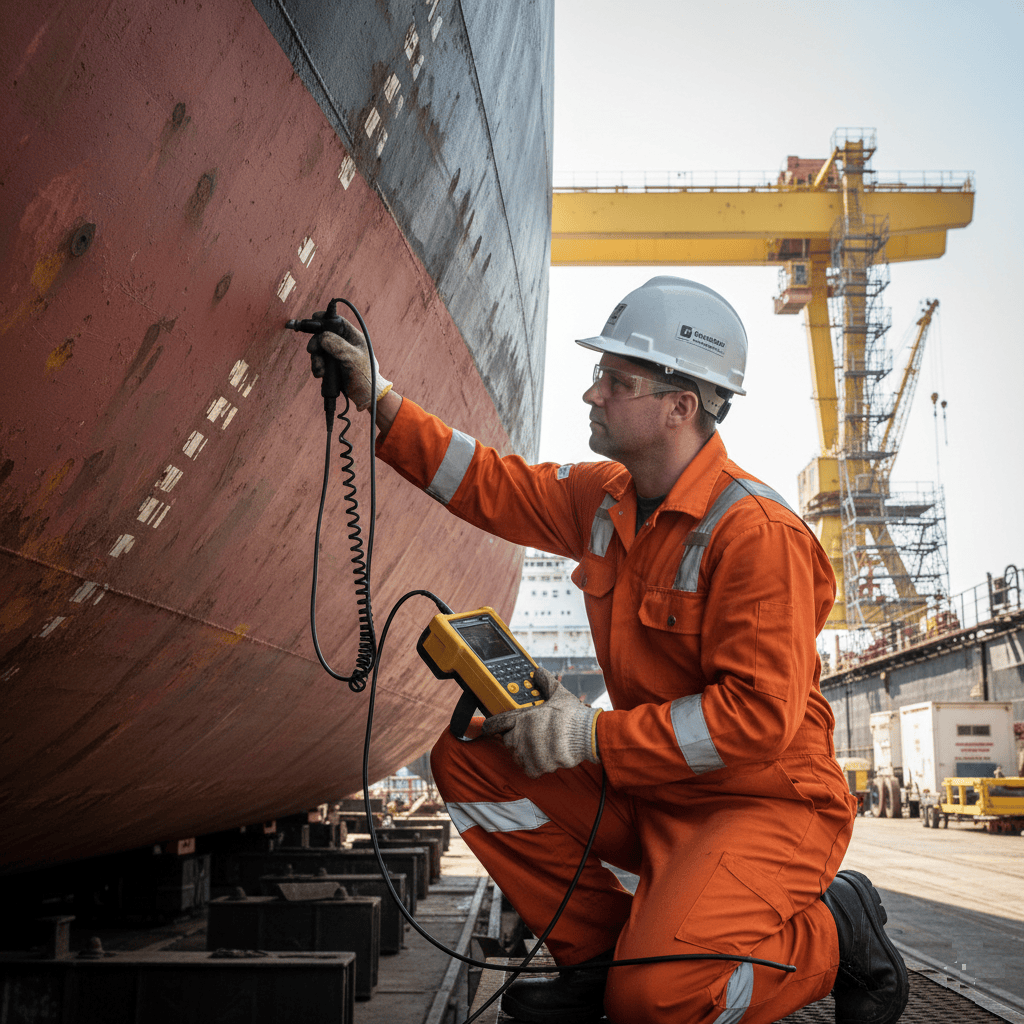
NDT is routinely used across a wide range of marine and waterfront structures, including:
Vessel hulls, decks, frames, and bulkheads
Aluminum and steel ship fabrication
Barges, workboats, and offshore support vessels
Docks, piers, pilings, and port infrastructure
Marine repair welding and retrofit work
Each application presents unique inspection challenges related to access, material type, corrosion exposure, and load conditions. Proper NDT selection ensures defects are identified early, before they compromise safety or lead to costly downtime.
Visual Testing is the foundation of marine inspection. Inspectors evaluate weld profiles, joint preparation, fit-up, and surface condition during fabrication, repair, and final acceptance. VT is especially important for identifying corrosion damage, surface cracking, undercut, porosity, and workmanship issues common in marine environments.
Remote Visual Testing (RVT) may be used for confined spaces, elevated structures, or hard-to-access areas found on vessels and port facilities.
PT is widely used in marine applications, particularly for aluminum and stainless steel components. It detects surface-breaking defects such as hairline cracks, fatigue damage, porosity, and leaks that may develop due to vibration and corrosion exposure.
PT is commonly applied to:
Aluminum hulls and superstructures
Stainless steel piping and fittings
Marine-grade fabricated components
MT is used for carbon steel components to identify surface and near-surface cracks, laps, seams, and weld toe defects. It is frequently applied to structural steel, support frames, brackets, and load-bearing marine assemblies.
This method provides fast, reliable results and is well suited for both shipyard fabrication and field repair work.
Ultrasonic Testing evaluates internal weld quality using high-frequency sound waves. UT is essential for critical marine welds where internal defects could compromise structural performance or fatigue resistance.
UT is commonly used on:
Structural frames and load-bearing welds
Heavy-wall components and connections
Critical repair welds and retrofits
UT allows precise defect detection and sizing without cutting or damaging the structure.
Protects against corrosion-related and fatigue failures
Supports compliance with maritime, AWS, ASME, and project-specific standards
Ensures weld integrity in high-vibration and cyclic-load environments
Reduces downtime by identifying issues early
Extends service life of vessels and waterfront structures
Marine NDT plays a critical role in maintaining safety, reliability, and long-term performance in coastal and offshore operations.
Marine and shipyard projects require inspectors who understand both welding standards and the realities of coastal environments. Professional NDT ensures welds meet acceptance criteria and perform reliably under real-world service conditions.
Whether supporting new vessel construction, dock repairs, or ongoing marine maintenance, NDT provides the confidence that welded components are fit for service.
Contact Us to schedule marine and shipyard NDT services.
PT and VT are the primary inspection methods.

